
Acne Treatment for Teenagers – Safe Options That Actually Work
Table of Contents
ToggleIntroduction
Acne is one of the most common skin concerns during the teenage years. Hormonal changes during puberty often increase oil production in the skin, leading to clogged pores, pimples, blackheads, and sometimes painful breakouts. For many teenagers, acne can affect not only their skin but also their confidence and self-esteem.
While acne is a normal part of growing up, ignoring it or trying random home remedies can make the condition worse. Understanding safe and effective acne treatment options for teenagers can help control breakouts early and prevent long-term scars.
Why Teenagers Get Acne
Teenage acne mainly occurs due to hormonal changes during puberty. These hormones stimulate the skin’s oil glands to produce more sebum. When excess oil mixes with dead skin cells and bacteria, pores become clogged and acne develops.
Common triggers include:
- Hormonal changes during puberty
- Excess oil production
- Poor skincare habits
- Stress and lack of sleep
- Diet high in sugary or processed foods
- Using heavy or oily skincare products
Safe Acne Treatment Options for Teenagers
1. Gentle Skincare Routine
The first step to controlling teenage acne is maintaining a simple and consistent skincare routine.
Recommended routine:
- Use a mild cleanser twice daily
- Avoid harsh scrubs or over-washing
- Use non-comedogenic moisturizers
- Apply sunscreen during the day
Keeping the skin clean without irritating it helps reduce breakouts.
2. Salicylic Acid or Benzoyl Peroxide Treatments
These ingredients are commonly used to treat acne.
Salicylic acid
- Helps unclog pores
- Reduces blackheads and whiteheads
Benzoyl peroxide
- Kills acne-causing bacteria
- Reduces inflammation
These treatments are often recommended for mild to moderate acne.
3. Prescription Medications
For moderate or persistent acne, dermatologists may prescribe:
- Topical retinoids
- Antibiotic creams or gels
- Oral medications in certain cases
Medical treatments help control oil production and reduce inflammation.
4. Chemical Peels for Acne
Mild chemical peels are sometimes used for teenagers with stubborn acne or acne marks.
Benefits include:
- Removing dead skin cells
- Reducing oil buildup
- Improving skin texture
These treatments are performed under professional supervision.
Learn about chemical peel
Learn about chemical peel
5. Laser or Light-Based Treatments
For severe acne or acne scars, dermatologists may recommend laser or light therapies that target acne-causing bacteria and reduce inflammation.
These treatments are usually considered when regular treatments do not give sufficient results.
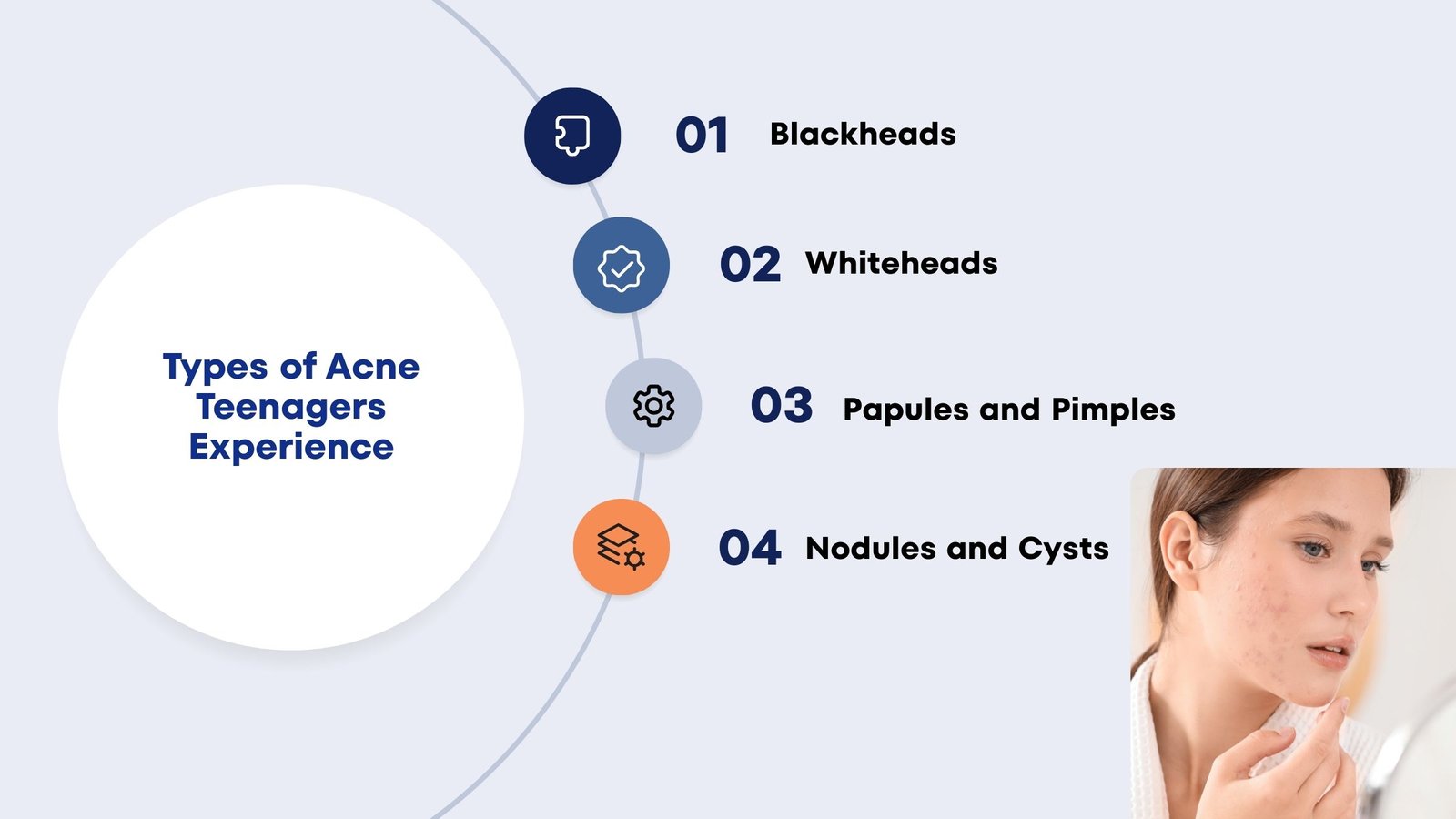
Types of Acne Teenagers Experience
Blackheads
Small dark spots caused by clogged pores that remain open.
Whiteheads
Closed clogged pores that appear as small white bumps.
Papules and Pimples
Red, inflamed bumps that may contain pus.
Nodules and Cysts
Severe acne that forms deep, painful lumps under the skin.
Early treatment helps prevent mild acne from becoming severe.
Lifestyle Tips to Control Teenage Acne
Small lifestyle changes can make a big difference.
* Avoid touching or picking pimples
* Wash pillowcases and towels regularly
* Reduce sugary and processed foods
* Drink enough water
* Get adequate sleep
* Manage stress levels
Healthy habits support better skin health.
Common Acne Mistakes Teenagers Make
Overwashing the Face
Washing the face too frequently can irritate the skin and increase oil production.
Using Too Many Products
Trying multiple products at once can worsen acne.
Popping Pimples
This can lead to infections and permanent scars.
Ignoring Sunscreen
Sun exposure can worsen acne marks and pigmentation.
When Should Teenagers See a Dermatologist?
Teenagers should consult a skin specialist if:
- Acne is painful or severe
- Breakouts leave marks or scars
- Over-the-counter products are not working
- Acne affects self-confidence
Early treatment prevents long-term skin damage.
Can Teenage Acne Be Prevented?
While acne cannot always be completely prevented, good skincare habits can reduce breakouts and keep skin healthier.
Consistent skincare, proper treatment, and avoiding common mistakes can significantly improve acne over time.
Frequently Asked Questions (FAQs)
Is teenage acne normal?
Yes. Acne is very common during puberty due to hormonal changes.
Can acne go away on its own?
Mild acne may improve over time, but treatment helps control breakouts and prevents scars.
Are home remedies safe for teenage acne?
Some natural remedies may help mild acne, but medical treatments are often more effective.
How long does acne treatment take to work?
Most treatments take 4–8 weeks to show visible improvement.
Should teenagers avoid makeup?
Not necessarily. Using non-comedogenic makeup products is generally safe.
Conclusion:
Acne is a common challenge during teenage years, but it does not have to be permanent or overwhelming. With the right skincare routine, safe treatments, and healthy lifestyle habits, teenage acne can be effectively managed.
Early treatment is the key to preventing scars and maintaining healthy skin. If acne persists or becomes severe, consulting a dermatologist can help determine the best treatment plan for long-term results.
Contact Us
1st floor, No. 67/B, N Park St., Secretariat Colony, Venkatapuram, Ambattur, Chennai – 600053